
LOWERING BAD CHOLESTEROL
Knowing and reaching the bad cholesterol goal you set with your healthcare provider can help reduce risk of heart attack and stroke.
There is a difference between lowering your bad cholesterol and lowering it to a goal recommended by your healthcare provider.
The goal for your bad cholesterol (LDL) level is the number you set with your healthcare provider. These goals are based on expert recommendations and guidelines. Your healthcare provider will use these guideline recommendations along with your medical history to determine your goal. Getting to and staying at your goal may help lower your risk of heart attack and stroke.
Your cholesterol goal is personal and can be affected by different things like:
- If you’ve previously had a heart attack or stroke
- Your age
- Your gender
- Your family history
- If you smoke
- If you drink alcohol
Your bad cholesterol goal could also be affected by different health conditions such as:
- High blood pressure (hypertension)
- Obesity
- Diabetes
- Chronic kidney disease
- Premature menopause
- History of preeclampsia
- Thyroid disease
There are many things, like your medical history, that could affect your risk of heart attack or stroke and your bad cholesterol goal. It is important to talk to your healthcare provider to set and reach the right bad cholesterol goal for you.
Talk to your healthcare provider to set your bad cholesterol goal
Your bad cholesterol goal depends on many things, including your medical history. Your healthcare provider will set that goal based on recommended LDL guidelines. Because everyone is different, they may have different goals.
In March 2026, a guideline* was released that encourages lowering bad cholesterol earlier in adult life to a goal set with your healthcare provider and based on things such as your age and health conditions.
Your goal will be personalized to you and may have changed since your last doctor visit. It is important to talk to your doctor to set and reach the cholesterol goal that is right for you.
These are some examples:

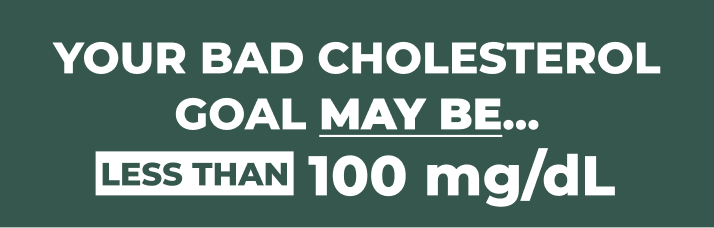
IF YOU ARE…
- A man aged 40 and above
- A woman aged 45 and above
- A person under these ages with certain other health conditions
This goal may be for people who have a moderate risk of heart attack or stroke

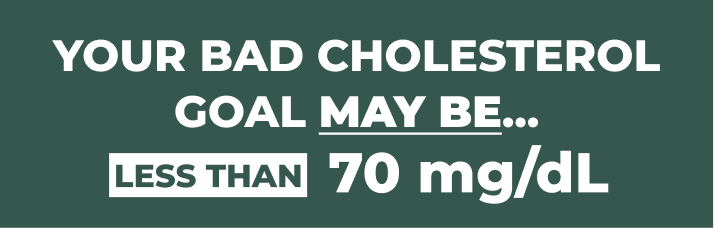
IF YOU HAVE…
- Certain health conditions plus other heart-risk factors, such as but not limited to:
- Severe hypercholesterolemia and/or familial hypercholesterolemia, which is a genetic disorder (screening must start earlier)
This goal may be for people who have a higher risk of heart attack or stroke

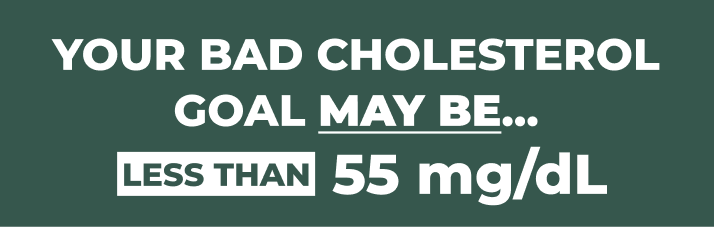
IF YOU HAVE HAD…
- A heart attack
- A stroke
- Or currently have other established cardiovascular disease
This goal may be for people who have the highest risk of another heart attack or stroke
*2026 American College of Cardiology/American Heart Association Multi-Society Guideline on the Management of Dyslipidemia
Remember to talk to your healthcare provider about your bad cholesterol at your next visit. Here are some questions to ask:


What is my bad cholesterol number?


Based on the guideline, what is my bad cholesterol goal? Should it be less than 100, 70, or 55?

How often will we check my bad cholesterol number?
Did you know?
In the US†:


adults who’ve had a heart attack or stroke were not at their recommended bad cholesterol goal
†Based on market data of US adults from a large and representative database (Truven MarketScan Research Database). Enrollees had 1 valid LDL measurement in 2019, were diagnosed with ASCVD, and were at least 21 years of age.